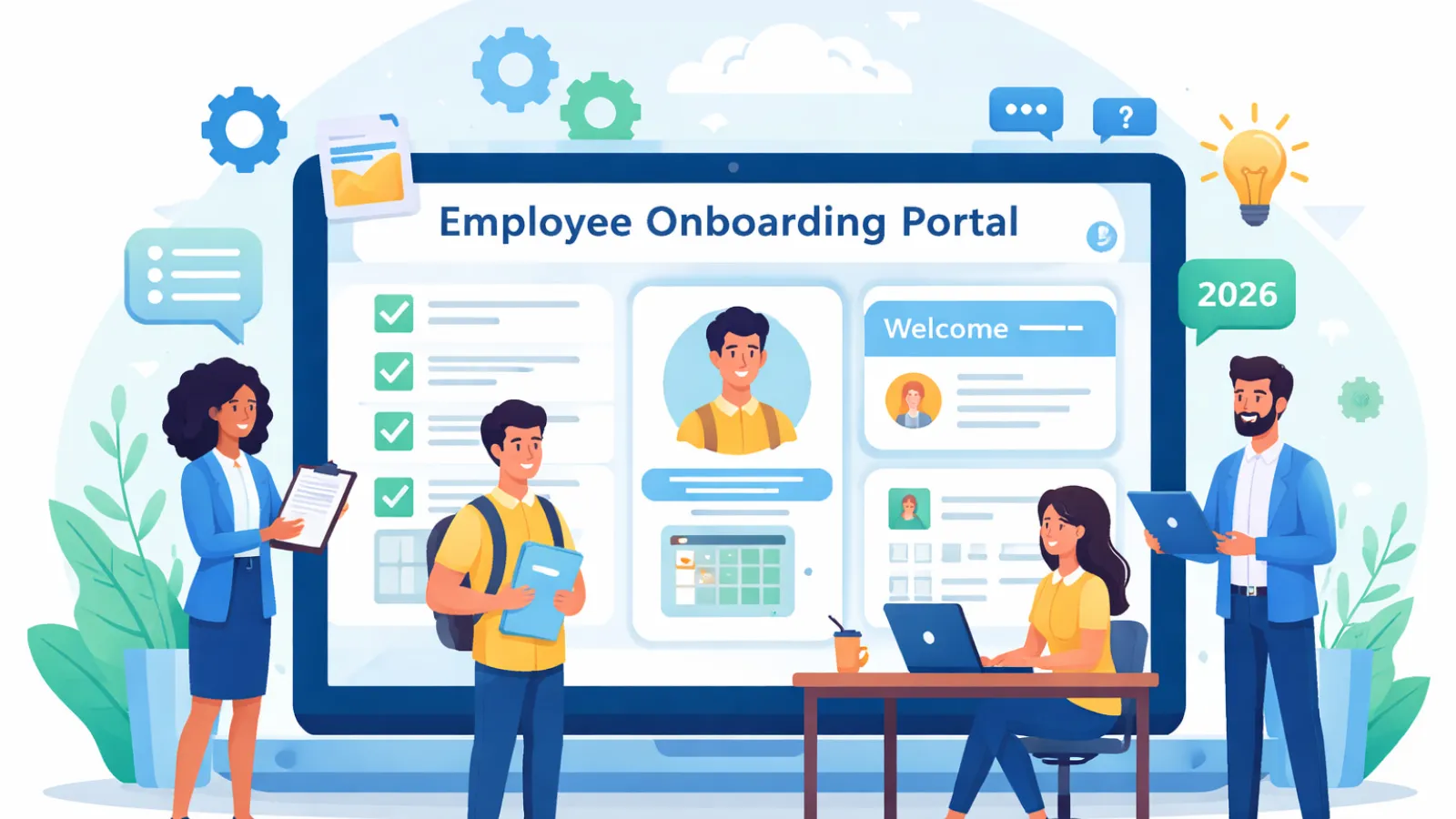

Nearly 30 percent of new hires leave within the first 90 days when onboarding is ineffective. Replacing them costs between 90 and 200 percent of their annual salary.
Organizations with structured onboarding see 82 percent higher retention and 70 percent increases in productivity. The employee onboarding portal sits at the center of these outcomes.
It is no longer just an administrative tool. It is the system through which a new hire decides whether they made the right choice.
The Financial Stakes
The business impact of onboarding is direct and measurable.
| Cost Category | SMB Average | Large Enterprise Average |
|---|---|---|
| Direct onboarding cost | $600 to $1,800 | Over $3,000 |
| Total recruitment cost | $4,425 | $4,700 plus |
| Executive onboarding | Not applicable | $28,000 plus |
| Turnover replacement cost | 16 to 20 percent of salary | 21 percent of salary |
Organizations with effective onboarding achieve 2.5 times higher revenue growth and 1.9 times better profit margins.
The key driver is time to productivity. It typically takes eight to twelve months for a new hire to reach full efficiency. A well-designed employee onboarding portal reduces this timeline by up to 40 percent.
What the Core Portal Must Deliver
In 2026, the baseline expectations for an employee onboarding portal have expanded significantly.
HRIS integration is essential. It ensures that data flows automatically between payroll, benefits, and IT systems, reducing manual errors and speeding up processes.
Single sign-on across all tools eliminates unnecessary friction. Role-based content delivery ensures that each new hire sees only what is relevant to them.
A searchable knowledge base reduces dependency on HR for routine queries.
AI capabilities are now operational. Generative AI personalizes learning and communication. Predictive analytics identifies disengagement early.
Agentic AI takes this further by coordinating actions across systems without manual tracking.
The Preboarding Window: The First Critical Moment
The time between offer acceptance and day one is often overlooked.
Silence during this period increases the risk of drop-offs and second thoughts. High-performing organizations actively engage new hires during this phase.
Preboarding portals provide early access to forms, benefits, and team information. This removes administrative burden from the first day and allows it to focus on relationships and culture.
Organizations that invest in preboarding see stronger early commitment and lower attrition before start dates.
Valuebound builds onboarding portals that activate at offer acceptance, not day one. Visit valuebound.com to explore this approach.
Building Social Capital in Digital Environments
In remote and hybrid workplaces, social connection does not happen naturally.
New hires depend on structured interaction to build relationships and understand how work gets done.
Manager involvement is critical. New hires are 3.5 times more likely to be satisfied when managers actively participate in onboarding.
Buddy systems also deliver strong results. Regular interaction with a peer significantly improves productivity and confidence.
An employee onboarding portal must enable these connections. Without them, onboarding becomes transactional instead of relational.
Digital Friction and Its Impact
Digital friction is a major but often ignored challenge.
Employees lose up to ten hours per month dealing with technical issues such as logins, system errors, and device problems. For new hires, this friction is even more disruptive.
High friction increases frustration, reduces confidence, and contributes to early attrition.
The solution is consolidation. A unified platform with single sign-on reduces complexity and allows new hires to focus on learning and contributing.
Neuro Inclusive Design Principles
A significant portion of the workforce is neurodivergent. Onboarding experiences must account for different cognitive needs.
Neuro inclusive design considerations
| Group | Design Approach | Outcome |
|---|---|---|
| Autism | Clear instructions and sensory guidance | Reduced anxiety |
| ADHD | Visual schedules and short tasks | Improved focus |
| Dyslexia | Accessible fonts and formats | Better comprehension |
| All users | Progressive information delivery | Lower cognitive load |
Progressive disclosure is especially effective. It ensures that information is delivered in manageable stages instead of overwhelming new hires.
The 30 60 90 Day Framework
Onboarding is not a one-week process. It extends over several months.
The 30 60 90 day model provides a structured approach.
The first 30 days focus on learning tools and culture. The next 30 days emphasize role-specific work. By 90 days, the focus shifts to performance and career direction.
Regular pulse surveys at key milestones provide feedback and allow early intervention.
Organizations that follow extended onboarding programs see faster competence and stronger retention.
Cohort Based Onboarding
Cohort-based onboarding groups new hires together during their integration journey.
This creates immediate peer networks and reduces isolation, especially in remote environments.
At the same time, role-specific customization ensures relevance.
This combination of shared experience and personalized learning improves both engagement and effectiveness.
Frequently Asked Questions
What is an employee onboarding portal?
It is a digital platform that manages the full onboarding journey, from preboarding to long-term integration. It focuses on experience, engagement, and productivity rather than just administration.
Why do new hires leave early?
Poor onboarding leads to confusion, lack of access, and social isolation. Without proper support, new hires quickly disengage.
How does agentic AI improve onboarding?
Agentic AI automates workflows, monitors progress, and triggers actions across systems. It reduces manual effort and improves responsiveness.
What metrics should be tracked?
Key metrics include time to productivity, retention at 90 days, onboarding satisfaction scores, and completion rates for onboarding tasks.
Conclusion: What Defines Effective Onboarding in 2026
The employee onboarding portal has become a strategic system.
It must start before day one, reduce friction, build relationships, and support diverse learning needs.
Organizations that treat onboarding as a long-term investment rather than a short-term process achieve better retention and performance.
The technology already exists. The real difference lies in how it is designed and implemented.
Visit valuebound.com to learn how Valuebound builds employee onboarding portals focused on retention, accessibility, and scalable personalized experiences.
