

Digital Transformation is the need of the hour for modern businesses- not just because it's the "trend," but also because there has recently been a paradigm shift in the way businesses engage with customers. At the heart of digital innovation is technology- more so- the latest tech trends that are suddenly changing the course of interaction between brands and consumers. Digital technology innovations have made brands more interactive for consumers, but how?
Valuebound believes that digital transformation involves not only what is titled by the buzzword – implementing new technologies – but really an evolution that would take into account the new expectations of a modern-day consumer and dispose of these inherent challenges within this transformation journey.
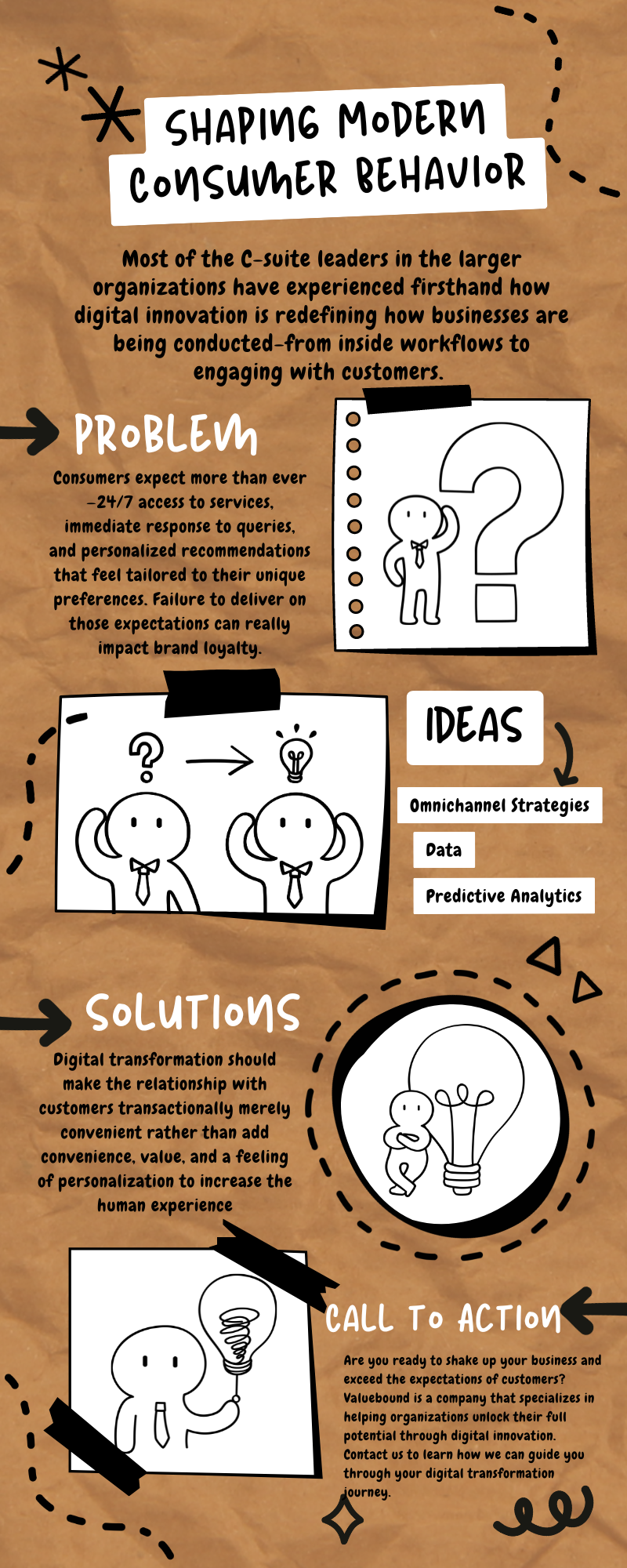
Most of the C-suite leaders in big organizations understand that digital innovation in the AI era is a whole new ball game, and it is more tech trends like these that are redefining how businesses operate and conduct from within their organizations. Let's not call it an upgrade; rather a whole new paradigm shift towards digital innovation. Everything is about consumer behavior and creating customer journeys that offer convenience, personalization, and immediacy of interaction with the help of a solid digital transformation strategy.
Digital Transformation and its Impact
Digital transformation refers to embedding digital technology into all aspects of a business. This means that all aspects of an organization experience significant alterations from top to bottom. Digital transformation is all about embedding latest technologies like machine learning, data analytics, and artificial intelligence- everything that can be a key differentiator between you and your competitor.
Customers now expect a seamless digital experience at every touch point. Because of instant access to information and recommendations and direct interaction with a brand, consumers have never had more power than they do today. As businesses invest in digital transformation, the time has come to focus on understanding and anticipating these evolving customer needs.
Fundamentally, digital transformation has reshaped consumer behavior, making a steep turn towards a more connected, personalized, and on-demand experience. Smartphone penetration and the proliferation of social media and e-commerce has made customers expect quicker and more seamless interaction across multiple touchpoints. Customers demand interactions across multiple platforms, real-time responses, and tailored offerings that meet their individual preferences.
The convenience brought about by digital technologies has empowered consumers to make more informed decisions. They can compare products, read reviews, and access services instantly, raising their expectations for transparency and speed. Businesses that fail to adapt risk losing customer loyalty, as consumers are now more likely to switch to competitors who offer a superior digital experience.
Moreover, digital transformation has given rise to new business models, such as subscription services and sharing economies, further altering traditional consumer behavior. The influence of AI and data analytics has enabled companies to predict consumer needs, enhancing the customer journey through personalized recommendations and automated support.
Digital transformation has made consumers more empowered, demanding, and connected, pushing businesses to innovate continuously to stay relevant in an increasingly competitive marketplace. The future of consumer behavior will likely be shaped by how well businesses can integrate digital strategies to meet evolving expectations. But what are the pain points of businesses today?
The Shift from Product-Centric to Experience-Centric
Businesses no longer compete only on product features or pricing. Today, the digital transformation of customer experience shapes how customers choose brands. The shift from product-centric to experience-centric models changes business priorities. Companies now focus on the entire customer journey instead of isolated products. This shift connects customer experience and digital transformation at every level.
Organizations use data, AI, and digital tools to better understand customer behavior. These tools support digital transformation in customer experience across channels. The focus moves from single transactions to consistent, personalized engagement.
Key Changes in This Transformation
From Selling to Serving
Companies shift from pushing products to addressing customer needs. They design services around customer expectations rather than internal roadmaps.
Customer Journey Mapping
Teams analyze each touchpoint from discovery to after-sales support. They identify friction points and improve usability across platforms.
Data-Driven Insights
Organizations integrate systems to remove data silos. They use behavioral data to personalize communication and recommendations. This is central to digital transformation efforts in customer experience.
Organizational Alignment
Departments collaborate around shared customer metrics. Product, marketing, and service teams align through unified platforms. This supports structured digital transformation for customer experience initiatives.
Competitive Advantage
Brands differentiate through service quality and consistency. Many now invest in digital transformation to improve the customer experience rather than to lower prices.
Understanding the Link Between Customer Experience and Digital Transformation
A customer opens your app to track an order. The update appears instantly. Support answers within seconds. That is the digital transformation of customer experience in practice.
Digital transformation uses technology, data analytics, and automation to improve interactions. It moves businesses from internal processes to customer-focused models. Instead of reacting slowly, companies respond in real time. They redesign systems around customer behavior, not internal limitations. This approach shapes digital transformation in customer experience strategies.
Key Aspects of the Link Between CX and Digital Transformation
Personalization at Scale: AI and data tools help businesses clearly understand customer preferences. They deliver tailored recommendations and relevant communication.
Omnichannel Consistency: Customers move between website, app, and physical store without friction. Digital systems ensure consistent service across every platform.
Proactive Service and Efficiency: Automation and AI chatbots provide support 24/7. They reduce waiting time and improve response accuracy.
Data Driven Decision Making: Companies use data to map journeys and identify friction points. They adjust processes to meet evolving expectations.
Cultural and Operational Shift: Teams break silos and align around customer goals.
How Digital Transformation Is Driving Customer Experience Today
Modern businesses use AI, automation, and analytics to shape interactions. They move beyond internal systems and focus on frictionless journeys. This approach defines digital transformation in customer experience across industries.
Hyper Personalization
AI analyzes browsing patterns, purchase history, and preferences. It delivers relevant content instead of generic promotions. This level of personalization strengthens loyalty and engagement. It reflects how digital transformation is driving customer experience at scale.
Omnichannel Consistency
Customers expect one continuous journey across platforms. They move from mobile to desktop to in-store without repeating information. Integrated systems make this possible.
Proactive and Instant Support
Chatbots and virtual assistants provide round-the-clock assistance. Real-time feedback systems reduce waiting time and frustration. Automation lowers effort while improving response accuracy. Many brands are adopting digital transformation to improve the customer experience and meet this demand.
Efficiency and Self-Service
Self-service portals allow customers to solve issues independently. Backend automation ensures faster processing and fewer errors. This improves both satisfaction and operational performance.
Businesses invest in digital transformation to improve customer experience through these tools.
Data Driven Insights
Analytics helps teams understand behavior patterns and journey gaps. Organizations anticipate needs rather than react to complaints. In a digital-first market, customers expect convenience and speed. Brands that ignore customer digital transformation struggle to retain attention. Technology now defines the standard for modern experience delivery.
The Impact of Digital Transformation on Customer Experience Metrics
You launch a new chatbot. Response time drops from minutes to seconds. Within weeks, customer complaints reduce, and satisfaction scores rise. This is how the impact of digital transformation on customer experience becomes visible. Businesses are increasingly using technology to improve customer experience by leveraging AI-driven insights, personalized communication, and seamless omnichannel interactions.
Digital transformation of customer experience is not just about new tools. It directly affects measurable outcomes like CSAT, NPS, and retention. When businesses adopt digital transformation for customer experience, they start seeing results in numbers, not just feedback.
Personalization plays a major role here. AI and data analytics help brands understand browsing behavior and purchase patterns. Customers receive relevant recommendations instead of generic messages. This improves engagement and increases Customer Satisfaction scores.
Read our guide on how AI in remote patient monitoring transforms healthcare marketing
Customer Effort Score also improves when friction is reduced. Self-service portals and AI chatbots allow customers to resolve issues quickly. Fewer steps mean less frustration. That simplicity reflects a strong digital transformation in customer experience practices.
Net Promoter Score often rises when interactions feel consistent and proactive. Omnichannel service ensures customers do not repeat information across platforms. That consistency builds loyalty and strengthens long-term relationships.
Revenue metrics also shift. Some organizations report significant sales growth after improving engagement systems. Better data usage and faster responses lead to higher conversion rates.
To measure customer experience digital transformation, businesses track clear indicators. CSAT shows how satisfied customers feel. NPS measures loyalty and referral intent. CES reflects how easy it is to interact with the company. Customer Lifetime Value reveals each customer's long-term revenue potential.
Using Technology to Enhance Customer Experience
Technology shapes how customers interact with brands today. Businesses use digital tools to create faster, smoother, and more personalized journeys. This is the foundation of modern customer experience technology.
Artificial Intelligence and Chatbots: AI enables round-the-clock customer support. Chatbots handle common questions instantly, reducing wait times. They improve response accuracy and simplify communication.
AI-Powered CRM Systems: Modern CRM platforms automate data entry and track customer interactions. They help teams understand customer history before engaging. Lead scoring and behavior tracking enable proactive service. This strengthens personalization across touchpoints.
Data Analytics and Real-Time Personalization: Analytics tools process browsing behavior and purchase patterns. They identify preferences and sentiment trends. Businesses use this data to tailor offers and communication. Personalized engagement increases satisfaction and loyalty.
Virtual and Augmented Reality: VR and AR create immersive product experiences. Customers can explore products virtually before making decisions. This reduces uncertainty and supports informed purchases.
Customer Experience Automation: Automation streamlines repetitive processes across departments. It speeds up order updates, service requests, and billing workflows. Fewer manual steps lead to fewer delays and errors.
Voice Technology and IoT: Voice-activated systems allow hands-free interactions. IoT devices enable connected and responsive service experiences. These tools enhance convenience and real-time engagement.
Digital Transformation to Improve Customer Experience Across Channels
Digital transformation connects systems, teams, and platforms to create consistent customer interactions. It ensures that customers receive the same quality of service, whether they engage online or offline. Below are the key areas that support digital transformation in customer experience across channels.
Unified Omnichannel Integration
Customers move between mobile apps, websites, social platforms, and physical stores. Digital integration ensures their information stays consistent across every channel. Order history, preferences, and support conversations remain connected. This eliminates the need to repeat details and reduces service gaps.
Data Driven Personalization Across Platforms
AI and analytics track customer behavior across devices and touchpoints. Businesses use this data to customize communication and product recommendations. Personalization becomes consistent instead of isolated to one platform. This strengthens loyalty and increases engagement.
Automation and Self-Service Support
Chatbots and automated workflows quickly resolve common queries. Self-service portals allow customers to track orders or update information independently. Automation improves speed and reduces waiting time across channels.
Customer Journey Mapping
Organizations analyze the complete customer journey from discovery to support. They identify friction points between channels and refine processes accordingly. This ensures a smooth and structured experience at every stage.
Emerging Technologies for Channel Enhancement
Voice AI simplifies search and customer support interactions. Augmented and virtual reality tools create immersive product experiences. These technologies support long-term digital transformation to improve customer experience.
Personalization as the Core of Digital Customer Experience Transformation
Personalization has become the foundation of digital customer experience transformation, as modern consumers expect brands to understand their preferences, anticipate their needs, and respond in ways that feel relevant rather than generic. Instead of relying on broad marketing campaigns, organizations now focus on behavior-based strategies that are powered by advanced customer experience technology.
Behavioral tracking plays a critical role in this process, as businesses analyze browsing history, purchase behavior, engagement patterns, and interaction frequency to build accurate customer profiles. This data allows AI-driven recommendation systems to deliver tailored product suggestions and customized content in real time, improving relevance and reducing decision fatigue.
Custom communication further enhances the experience by ensuring that emails, notifications, and promotional messages reflect individual interests instead of standardized messaging. At a more advanced level, predictive service models use data patterns to anticipate customer needs before problems occur, enabling proactive engagement that strengthens trust, loyalty, and long term retention.
Challenges of Digital Transformation
Digital transformation holds immense potential, but it also presents businesses with ongoing challenges. One of the biggest is keeping up with shifting consumer expectations. Today’s consumers expect round-the-clock access to services, quick responses to their inquiries, and personalized recommendations that feel tailor-made. Falling short in any of these areas can significantly affect customer loyalty.
A major hurdle for many businesses, especially long-established ones, is the integration of legacy systems with modern digital technologies. For many, outdated infrastructure makes it difficult to innovate digitally. This not only slows down the transformation process but also hampers the ability to offer smooth, seamless experiences to customers.
Additionally, concerns around data protection and security remain a significant barrier to full digital transformation. As consumers become more aware of their digital footprints, businesses must find ways to balance personalization with data privacy.
Age of Omnichannel Experiences
Another key focus in digital transformation is omnichannel customer experiences. Today’s consumers engage with brands across multiple touchpoints—mobile apps, websites, social media, and in-store interactions. To stay competitive, businesses must deliver a consistent and seamless experience across all these channels.
At Valuebound, we’ve helped many organizations enhance their customer engagement through omnichannel strategies. By using AI-powered chatbots, personalized email campaigns, and data-driven insights, we ensure that customers receive a unified, tailored experience no matter where or how they interact with the brand. This approach strengthens customer loyalty and delivers more meaningful connections across all platforms.
Leveling Data to Consumer-centric Strategies
The data is the core of today's modern business strategy, enabling businesses to lead in the ever-changing pattern of consumer behavior shaped by digital transformation. Using these data intelligently, businesses can unlock precious insights into customers' preferences, buying patterns, and emerging trends. This data-driven approach allows a business to provide experiences at scale, and more importantly, connect strongly with consumers.
Predictive analytics is one of the methods that can predict the needs of its customers and even provide anticipatory solutions. Businesses can fit their marketing efforts with the unique needs and wants of specific consumer based on past behaviors and interactions. Such a level of personalization boosts customer satisfaction while driving long-term loyalty.
Innovating for Human Solutions in Digital Transformation
Lack of digital skills and talent across industries has become a major roadblock for organizations willing to take their digital leap. New digital systems, emerging technologies, and innovations require workforce that can adapt to a fast-changing digital ecosystem. Even with Gen-Z adapting the pace of technologies, organizations still struggle to find or train talent that can meet these demands. This hampers or creates a gap between phases of digital transformation strategy. It also creates delays in adopting and implementing the latest digital tools and strategies.
At Valuebound, we provide strategic consulting on identifying these talent gaps, helping organizations reskill their workforce and create an agile team ready for digital transformation. We help businesses ensure they have the right talent to navigate the ever-evolving digital landscape.
We offer strategic consulting to help organizations identify these skill gaps and support them in reskilling their workforce. We work with companies to build agile teams equipped to handle the fast-paced demands of digital transformation, ensuring they have the talent needed to thrive in a rapidly changing landscape.
Accepting Digital Transformation for a Customer-Centric Future
The rapid pace of digital transformation demands business agility, adaptability, and a strong focus on the customer. At Valuebound, we are committed to helping organizations navigate the complexities of their digital transformation strategy—from leveraging cutting-edge technologies to understanding and responding to evolving consumer behavior. Our goal is to enable businesses to deliver joyful, personalized, and innovative digital experiences that meet rising customer expectations.
This is just the beginning of the journey toward a fully transformed digital world, offering endless opportunities for companies that embrace the change. Through digital innovation, businesses can seize these opportunities, overcoming digital transformation challenges and unlocking sustainable value for both customers and themselves.
Are you ready to transform your business and exceed customer expectations? Valuebound specializes in helping organizations achieve their full potential through digital innovation. Contact us to learn how we can guide you through your digital transformation journey and help you stay ahead in an increasingly competitive market.
FAQs:
1. What is digital transformation?
Digital transformation is the rapid, strategic integration of digital technology across all areas of a business, enabling it to use digital technologies to create fundamentally new--barring rare exceptions--product and service designs.
2. How does digital innovation influence consumer behavior?
Digital innovation enables consumers to have more information and tailored experiences, bringing businesses onto their own terms, which makes convenience and speed significantly riskier.
3. What are some of the most common risks in digital transformation?
These include integration of the new technologies with the existing legacy systems, data privacy and security, and the expectation from consumers for seamless journeys across channels, thereby making these experiences more personalized.
4. How can companies use data to improve customers' experience?
Companies can use predictive analytics and data insights to better understand customer needs and provide customized solutions to improve their experience and loyalty.
5. What is the role of human factors in digital transformation?
Although technology is an important building block, the human element must form that connection with the customer. Businesses are quickly realizing the importance of an improved customer experience through personalization, convenience, and value.
6. How can we use emerging technology to improve customers' experience?
Emerging technologies such as artificial intelligence, machine learning, chatbots, data analytics, and automation can significantly enhance customer experience by enabling personalized interactions, faster support, predictive service, and seamless omnichannel communication.