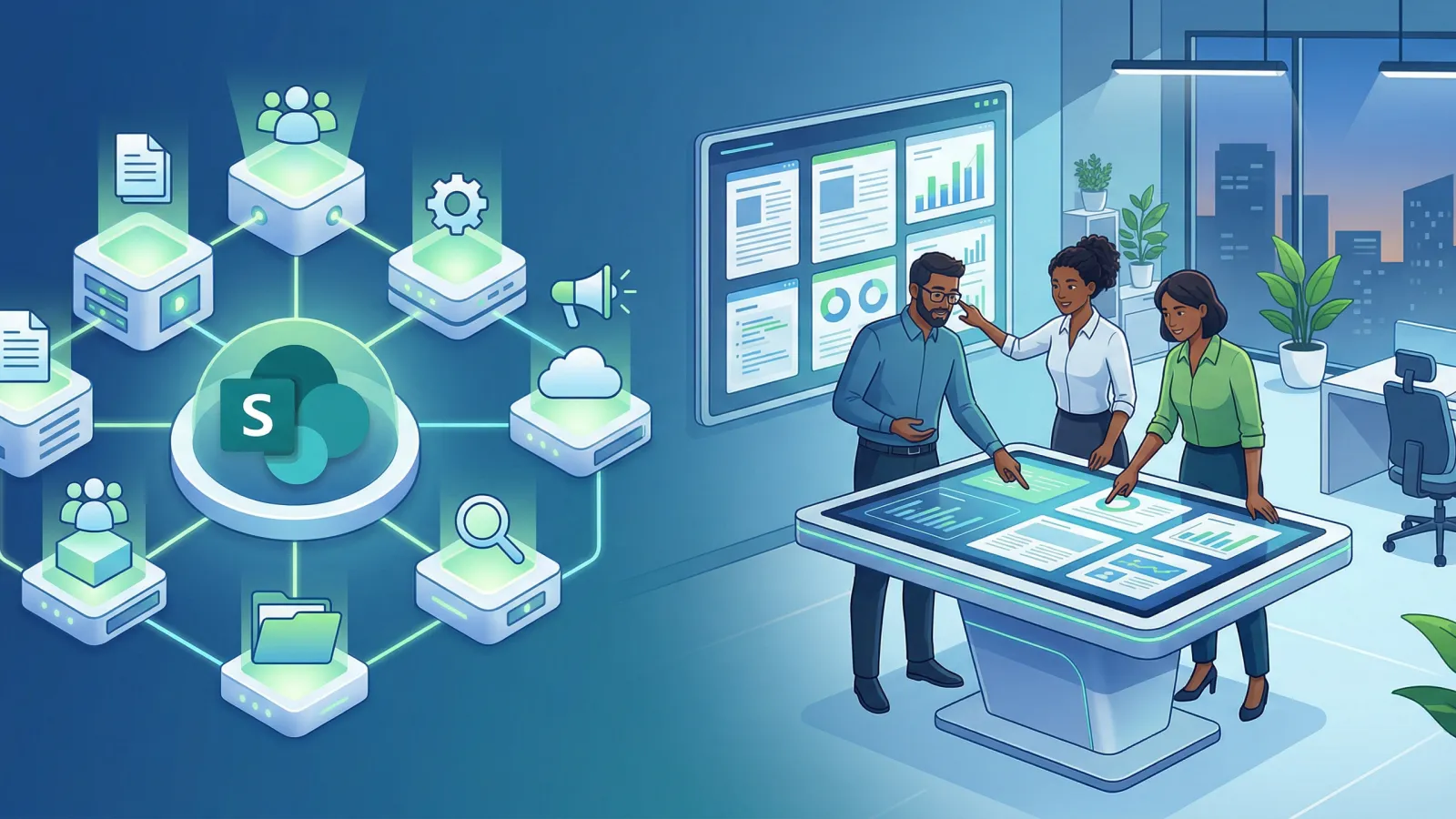

A lot of organizations already have SharePoint sitting inside their Microsoft 365 subscription and have never done much with it. Others have tried setting up an intranet with SharePoint before, ended up with something confusing and cluttered, and quietly abandoned it.
Both situations are more common than most IT teams admit. And both are fixable.
Setting up an intranet with SharePoint isn't about knowing every feature the platform offers. It's about coming in with a clear plan, a realistic understanding of what SharePoint does well, and a genuine focus on the people who will use it every day. Get those three things right and you're most of the way there.
This guide gives you the practical foundation to do exactly that.
Why SharePoint Works Well as an Intranet Platform
SharePoint has been the backbone of enterprise intranets for over two decades. That staying power comes from a few genuine strengths worth understanding before you start building.
It Lives Inside Microsoft 365
For organizations already running on Microsoft 365, SharePoint isn't a separate tool to learn or a new vendor to manage. It connects natively with Teams, Outlook, OneDrive, Planner, and Power Automate. Employees access intranet content from inside tools they already use every single day.
Access Control Is Granular and Reliable
SharePoint's permission model lets you control who sees what down to the level of individual documents and pages. Role-based access, Microsoft 365 group integration, and Azure Active Directory sync make managing a large workforce's access genuinely manageable.
It Scales Comfortably
Whether your organization has 80 employees or 80,000, SharePoint Online handles the load without your IT team worrying about servers, patches, or infrastructure. Microsoft manages all of that behind the scenes.
Compliance Features Are Built In
Regulated industries get audit trails, data loss prevention policies, retention labels, and eDiscovery support out of the box. For finance, healthcare, legal, and pharmaceutical organizations, this level of compliance infrastructure is a serious advantage over standalone intranet platforms.
Before You Build: The Groundwork That Actually Matters
The organizations that end up with cluttered, underused SharePoint intranets almost always skipped this stage. Don't make that mistake.
Get Clear on What Problem You're Solving
Vague goals produce vague intranets. Get specific. Are employees spending too long searching for HR documents? Is onboarding inconsistent across locations? Are remote teams disconnected from company culture? Name the actual problems and build to solve them.
Bring the Right People Into the Room
An intranet touches HR, IT, internal communications, and every department that uses it. Get input from all of these groups before designing anything. Their involvement at the planning stage means fewer surprises during the build and stronger internal support at launch.
Decide Who Owns What Before You Build Anything
Governance is the part of intranet projects that everyone finds boring and everyone eventually wishes they'd done properly. Before a single page gets created, answer these questions:
- Who is the overall intranet owner?
- Who can create new sites?
- Who publishes content on each section?
- How often does content get reviewed?
- What happens to pages that go stale?
Document the answers. Share them with everyone involved. Revisit them every six months.
Check Your Microsoft 365 License
SharePoint Online is included in most Microsoft 365 Business and Enterprise plans, but not every feature is available at every tier. Confirm what your current license covers before planning capabilities that might require an upgrade. Your IT team or Microsoft partner can help clarify this quickly.
Understanding SharePoint's Core Building Blocks
Before you start clicking around in SharePoint, understand the three components you'll be working with most.
Hub Sites
A hub site is the homepage of your intranet. It connects related sites under unified navigation and consistent branding. Think of it as the front door. Everything else branches out from here.
Communication Sites
Communication sites are where organization-wide content lives. Company news, HR policies, IT guidelines, leadership updates, and company-wide announcements all belong here. A smaller group of people publish content that the whole organization reads.
Team Sites
Team sites are collaborative spaces for specific departments or project groups. Each team site connects to a Microsoft Teams channel. HR, finance, marketing, engineering, and operations each get their own space to manage documents, projects, and internal communications.
Understanding how these three components work together is essential before you start building. Most SharePoint intranet problems trace back to not getting this structure right from the start.
Setting Up an Intranet With SharePoint: The Step-by-Step Process
Step 1: Configure Your SharePoint Admin Center
Start in the Microsoft 365 admin center, then navigate to the SharePoint admin center. Set your external sharing policies, configure default site storage limits, and establish naming conventions for sites, pages, and document libraries.
These settings apply across your entire SharePoint environment. Getting them right at the start prevents messy cleanup later. Take your time here even though it feels like administrative housekeeping.
Step 2: Plan and Create Your Hub Site
Your hub site is your intranet homepage. Create a communication site first, then register it as a hub site through the SharePoint admin center. The hub site connects all your other sites under a shared navigation bar and consistent visual theme.
Design the hub homepage around your employees' most common needs. A company news feed, quick links to key resources, an events calendar, an employee directory link, and a prominent search bar should all be visible without scrolling. Keep it clean. A cluttered homepage trains employees to skip it.
Step 3: Build Your Communication Sites
Create individual communication sites for each organization-wide content area. Common examples include:
- HR policies and employee resources
- Company news and announcements
- IT support and guides
- Leadership communications
- Learning and development resources
Each communication site needs a named owner, a consistent layout based on your approved template, and a defined content update schedule. Associate every communication site with your hub site so they inherit consistent navigation and branding automatically.
Step 4: Create Department Team Sites
Set up team sites for each department. Connect each team site to its corresponding Microsoft Teams channel during setup. This creates a seamless link between real-time collaboration in Teams and structured reference content in SharePoint.
Configure consistent document library structures across all team sites. Apply metadata columns that make filtering and search effective. Use SharePoint's site templates so every new team site starts from the same approved baseline, keeping the intranet visually and structurally consistent as it grows.
Step 5: Set Up Permissions Properly
Use Microsoft 365 groups to manage site access rather than adding individuals directly to sites. This approach makes permissions far easier to maintain as people change roles or leave the organization.
Apply three permission levels consistently across all sites. Owners manage the site and its settings. Members can create and edit content. Visitors can read but not edit. Document your permission structure and share it with site owners so everyone understands the model.
Review permissions every quarter. Outdated access is both a security risk and a governance problem.
Step 6: Configure Your Navigation
Global navigation in SharePoint ties the entire intranet together. It appears consistently across all hub-associated sites, giving employees a reliable way to move between sections regardless of where they start.
Keep global navigation to your most important destinations. Aim for no more than six or seven top-level items. Employees should be able to reach any major section of the intranet within two or three clicks. If that's not possible with your current structure, simplify the structure before you simplify the navigation.
Test navigation with real employees before launch. What feels logical to the team that built it often doesn't feel logical to someone using it for the first time.
Step 7: Add and Configure Web Parts
SharePoint pages are built from web parts, modular content blocks that display news, documents, events, people profiles, quick links, and more. Each web part is configurable and can be added to any page through the page editor.
Key web parts to configure for your intranet:
- News web part on the hub homepage to surface recent articles from all associated sites automatically
- Quick links web part for fast access to the tools and resources employees use most
- People web part to surface employee profiles and contact information
- Events web part for the company calendar
- Highlighted content web part to feature important documents or pages
Use web parts deliberately. Adding every available web part to your homepage creates noise that buries the content employees actually need.
Step 8: Set Up Viva Connections for Mobile Access
If your organization has remote workers, field-based employees, or a workforce that primarily uses mobile devices, Viva Connections is worth configuring. It surfaces your SharePoint intranet content directly inside Microsoft Teams on mobile, removing the need for employees to navigate a browser to access the intranet.
Viva Connections also supports a customizable dashboard with cards for quick access to HR tools, company news, tasks, and more. It's one of the most effective ways to extend intranet reach to employees who are rarely at a desk.
Making Search Work the Way It Should
Search is one of the most important features of any intranet and one of the most commonly neglected in SharePoint deployments. Employees who can't find what they need stop trying. That failure has a real productivity cost every single day.
Here's how to make Microsoft Search in SharePoint actually useful:
- Apply metadata consistently across all document libraries. Search results are only as good as the metadata behind them.
- Set up promoted results for your most frequently searched content. If employees search for "leave policy" every week, make sure the right document appears at the top.
- Configure search verticals so employees can filter results by content type. People, documents, news, and pages should each be searchable as distinct categories.
- Run regular content audits to remove outdated documents that pollute search results with irrelevant hits.
- Review search query reports monthly. What people search for but can't find tells you exactly where your content gaps are.
Good search transforms how employees experience the intranet. Bad search makes everything else feel broken, even when it isn't.
Branding Your SharePoint Intranet
Out of the box, SharePoint looks functional but unmistakably generic. Bringing your organization's visual identity into the platform changes how employees feel about using it. A platform that looks like your company feels like it belongs to your company.
Apply a Custom Theme
SharePoint's theme settings let you set your primary brand colors across all hub-associated sites in one step. This is the quickest win for visual consistency and takes very little configuration time.
Customize Your Homepage Layout
Use SharePoint's page editor to arrange web parts in a layout that guides employees naturally. Add your company logo, use brand-aligned imagery where appropriate, and create a visual hierarchy that draws attention to the most important content first.
Build and Enforce Site Templates
Create an approved template for communication sites and a separate one for team sites. Apply these templates by default whenever a new site is created. Consistent templates prevent individual departments from drifting into their own visual direction and keep the intranet feeling cohesive at scale.
Extend With SharePoint Framework When Needed
SharePoint's native customization options have a ceiling. When you need functionality or design elements beyond what the platform offers out of the box, SharePoint Framework development unlocks custom web parts and extensions that go significantly further. Organizations with specific design requirements or complex feature needs often reach this point and benefit from working with an experienced development partner.
| Customization Level | What It Covers | Who Does It |
|---|---|---|
| Theme and colors | Brand colors applied across all sites | SharePoint administrator |
| Page layout and web parts | Homepage design, content arrangement | Site owner or administrator |
| Site templates | Consistent baseline for all new sites | SharePoint administrator |
| Custom web parts | Functionality beyond native options | SharePoint developer |
| Full SPFx development | Complex custom features and integrations | Experienced development partner |
Driving Employee Adoption After Launch
A well-built SharePoint intranet that employees don't use is a failed project regardless of how good the build is. Adoption requires deliberate effort and it starts well before launch day.
Involve Employees Before You Build
Run discovery sessions with employees from different departments and seniority levels. Ask what information they struggle to find, what processes feel clunky, and what they'd want from a better intranet. Build what they tell you they need. People use tools they helped shape.
Build Awareness Before Launch
Don't keep the intranet secret until it goes live. Share previews with a pilot group. Send teaser communications in the weeks before launch. By the time the intranet is available to everyone, you want curiosity already built up, not surprise.
Run Targeted Training Sessions
Different employee groups need different things. Content owners need to know how to publish and manage pages. Department administrators need to understand permissions and site management. General employees need to know how to find what they need quickly. Run separate, focused sessions for each group and keep them short.
Recruit Intranet Champions
Identify enthusiastic employees in each department who can serve as the local go-to resource for their colleagues. These people don't need technical backgrounds. They need familiarity with the platform and a willingness to help. Champions are often more effective at driving adoption than any top-down communication campaign.
Track Adoption Metrics From Day One
SharePoint's built-in analytics show page views, unique visitors, popular content, and traffic trends. Review these weekly in the first month after launch. Low traffic on specific sections signals a problem worth investigating quickly before disengagement becomes a pattern.
Keeping Your Intranet Healthy Long Term
Launch is the beginning, not the end. The organizations with the most successful SharePoint intranets treat ongoing maintenance as a core responsibility, not an occasional task.
- Run quarterly content audits across all major sections. Remove or update anything outdated or inaccurate.
- Review permissions every quarter as employees change roles, join teams, or leave the organization.
- Monitor search query reports monthly to catch content gaps before they become frustrations.
- Collect employee feedback through short surveys twice a year and act visibly on what you hear.
- Stay current with Microsoft updates. SharePoint Online receives regular feature additions. New capabilities often solve existing problems if your team is paying attention.
- Revisit your information architecture annually. As your organization grows and changes, your intranet structure needs to evolve alongside it.
FAQs About Setting Up an Intranet With SharePoint
Do I need a separate SharePoint license to set up an intranet?
SharePoint Online is included in most Microsoft 365 Business and Enterprise plans. If your organization already has one of these licenses, you're not paying extra for the platform. Build costs, external development support, and any premium Microsoft add-ons like Viva are separate.
How long does it take to set up a SharePoint intranet?
A focused basic intranet with core features typically takes 4 to 8 weeks to set up. A full enterprise deployment with custom branding, multiple integrations, and a structured employee rollout usually takes 3 to 5 months. The biggest variables are the complexity of your requirements and how quickly your stakeholders can review and approve decisions during the build.
Can a non-technical person set up a SharePoint intranet?
A technically comfortable administrator can handle basic SharePoint intranet setup without development experience. As requirements grow to include custom branding, complex workflows, third-party integrations, or SharePoint Framework development, working with an experienced SharePoint developer or external partner becomes increasingly important.
How do I structure a SharePoint intranet for a large organization?
Large organizations typically use a hub site as the intranet homepage, with multiple communication sites for organization-wide content and team sites for each department or business unit. Consistent templates, clear governance, and strong global navigation are especially important at scale. Consider separate hub sites for distinct business divisions if your organization operates across significantly different functions or geographies.
What is the difference between a communication site and a team site in SharePoint?
Communication sites are designed for broadcasting content to a wide audience. A small group of people publish content that everyone reads. Team sites are designed for collaboration within a specific group. Members create, share, and work on documents together. Both types of sites connect to hub sites and play distinct roles in a well-structured intranet.
How do I improve SharePoint intranet adoption after a poor launch?
Start with honest feedback collection. Find out why employees aren't using it through surveys or direct conversations. Common issues include poor navigation, outdated content, irrelevant features, and lack of awareness. Address the root causes rather than running generic promotion campaigns. Visible improvements based on employee feedback are the fastest way to rebuild trust in the platform.
Can SharePoint connect with HR tools like Workday or SAP?
Yes, though these integrations require more planning than Microsoft-native connections. SharePoint can connect with Workday, SAP, Salesforce, and other third-party platforms through Power Automate connectors, REST APIs, and custom development. Always confirm integration requirements and complexity before committing to a timeline or budget.
Conclusion
Setting up an intranet with SharePoint is one of the most practical digital workplace investments an organization running on Microsoft 365 can make. The platform is already there, it's secure, it scales, and it connects naturally with the tools your teams use every single day.
What separates a SharePoint intranet that employees rely on from one that quietly gets ignored comes down to three things. Thoughtful planning before you build. A genuine focus on the people using it. And consistent investment in keeping it useful after launch.
The technical work is important. But the human work, understanding your employees' needs, involving them in the process, and earning their trust over time, is what makes the difference.
Get those foundations right and SharePoint becomes something your organization genuinely depends on.
Ready to start setting up an intranet with SharePoint the right way? Contact Valuebound and let's build something your team will actually use every day.