
Enterprise technology departments hit a critical performance bottleneck when trying to scale learning applications to serve large corporate workforces simultaneously. While standard monolithic platforms easily handle a few hundred concurrent users, they quickly break down when thousands of employees access the system at once. This resource exhaustion usually peaks during mandatory end-of-quarter security training or when the human resources department pushes high-profile compliance deadlines. The resulting database lag and system timeouts quickly disrupt the broader corporate network, taking down essential communications.
This infrastructure guide analyzes the backend architectural configurations required to support thousands of active users inside an enterprise intranet portal. We move past basic server optimization tips to examine horizontal scaling methods, socket allocation rules, and memory management pipelines. By applying these specific software engineering concepts, your technology team can build a resilient, decoupled learning service layer. This architecture easily absorbs sudden traffic spikes while maintaining strict performance benchmarks across the digital workplace.
The Functional Consensus: Peak Loads and Resource Quotas
Enterprise system architects understand that scaling web software requires a clear strategy for managing system resource quotas under heavy traffic. The standard industry approach relies on configuring load balancers to distribute incoming user requests evenly across multiple application servers. Most corporate IT departments configure auto-scaling rules within cloud environments like AWS, Azure, or Google Cloud to spin up extra virtual instances when CPU utilization crosses a specific percentage threshold.
Standard setups handle scaling at the web server layer by adding identical application nodes behind a common gateway. When traffic recedes, the system terminates these extra instances automatically to save infrastructure costs. This classic approach keeps web servers responsive during normal business hours but completely fails to protect backend relational databases from locking up when thousands of users write logs simultaneously.
The Stateless Microservices and Database Read Replicas
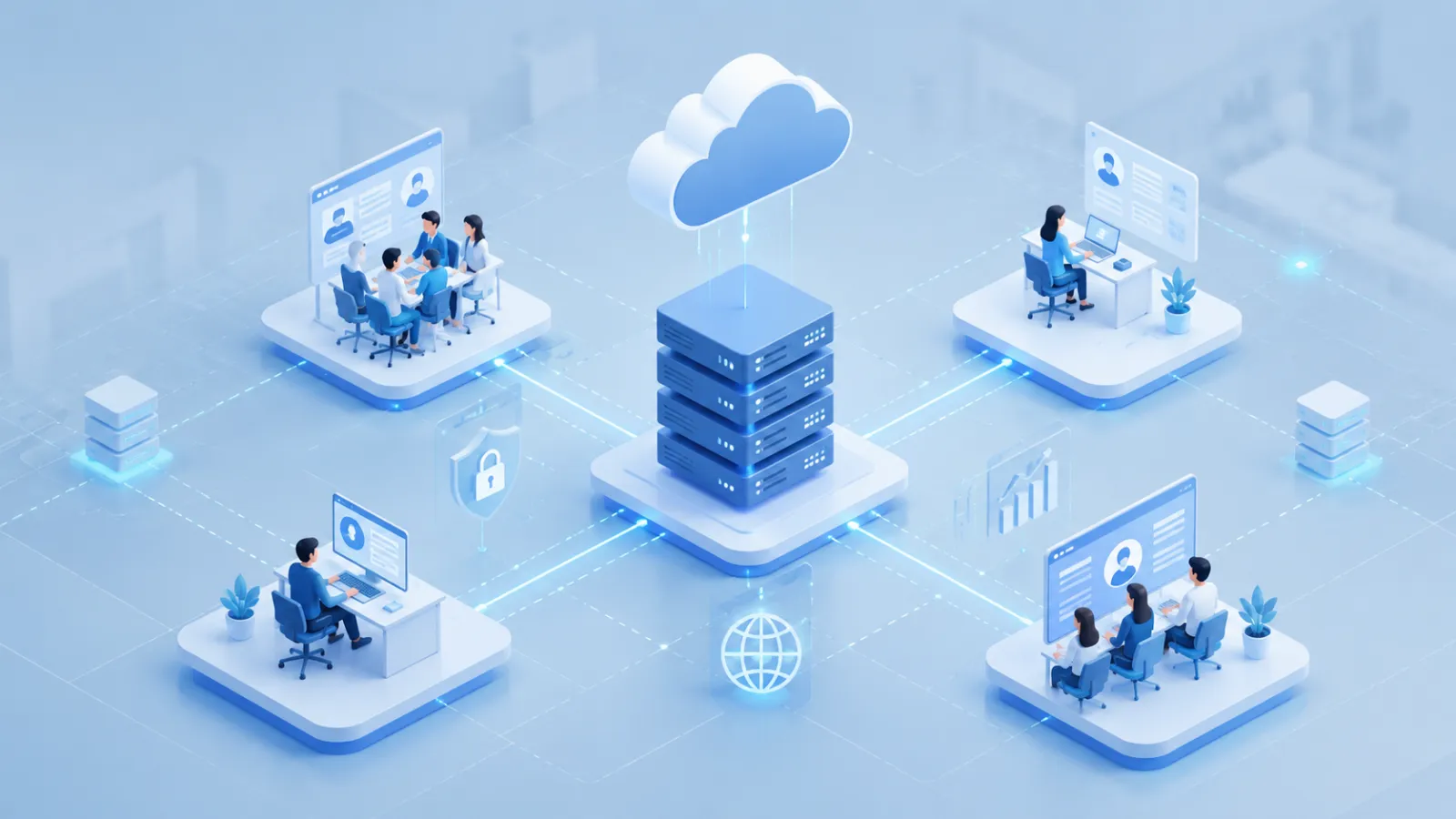
Moving past simple web server scaling requires moving toward a decoupled, stateless microservice layout designed to isolate heavy traffic patterns. This modern design breaks the old monolithic learning application into small, independent services that run inside isolated containers like Docker or Kubernetes.
[User Fleet] ──► [Global Load Balancer]
                         │
        ┌────────────────┴────────────────┐
        ▼                                 ▼
[Stateless Auth Node]            [Stateless Learning Node]
        │                                 │
        ▼                                 ▼
[Write Master DB] ───────────────► [Read Replicas Pool]
 (Compliance Audits)                 (Course Catalog Queries)
By decoupling core business modules, your IT team can scale specific high-traffic services independently without duplicating the entire software environment. The user profile authentication service, the multimedia catalog explorer, and the tracking results engine operate as standalone codebases. The frontend intranet portal queries these microservices through a fast API gateway, routing search requests to database read replicas while saving the master database node for vital tracking updates. This keeps your system fast but creates immense complexity if underlying code paths contain hidden memory issues.
Architectural Gaps: Unpredicted Memory Allocation Leaks
Deploying an auto-scaled container infrastructure exposes hidden system weaknesses that standard software vendors rarely mention in technical documentation. The core problem stems from how traditional tracking engines parse and hold massive data objects in memory during active user sessions.
Enterprise system engineers must address three specific architectural failure mechanisms:
- Rapid memory degradation caused by loose tracking state objects.
- Operating system socket exhaustion during high-concurrency authentication steps.
- Input-output bottlenecking inside shared file storage clusters.
The Network Socket Exhaustion Crisis during Compliance Surges
When a company mandates that fifty thousand employees complete an annual compliance course within a short forty-eight-hour window, user traffic surges exponentially. This creates a hidden network crisis within your infrastructure. Every single course action—like launching a page, answering a question, or pausing a video—fires a separate web request that opens a temporary network socket connection to the central database.
[30,000 Concurrent Users] ──► [API Gateway] ──(All Ports Busy)──► [Database Socket Pool Exhausted]
                                                                        │
                                                                        ▼
                                                             [504 Gateway Timeout]
When thousands of users click through slides simultaneously, the database pool quickly runs out of available connection ports. This resource exhaustion causes immediate system timeouts, dropping user tracking data and crashing your portal. This specific infrastructure failure mechanism matches the precise operational breakdowns seen when Enterprise LMS Modernization 2026 initiatives stall due to poor network resource planning. To avoid these infrastructure crashes, software engineers must configure connection pooling tools like PgBouncer to manage socket lifetimes efficiently. This keeps your digital workplace fast and reliable, preventing the system dropouts that cause Why Claims Automation Platforms Stagnate as Internal Portals over time.
Shared File Storage Bottlenecks inside Containerized Nodes
To serve large video courses and interactive training files across multiple container nodes, web architectures rely on shared network file systems like AWS EFS or local NFS clusters. When thousands of employees stream the exact same multimedia asset at the same time, the storage hardware encounters severe input-output bottlenecks. The underlying network pipeline chokes on data requests, causing media files to freeze and tracking routines to time out.
[User Cluster] ──► [Container Instances] ──(IOPS Bottleneck)──► [Shared Network Storage (NFS/EFS)]
                                                                       │
                                                                       ▼
                                                             [Frozen Video Player]
To prevent this shared storage lag from slowing down your digital workplace portal, engineers must offload all static media to a globally distributed Content Delivery Network like Cloudflare or AWS CloudFront. Storing heavy files on edge servers removes the data load from your core servers. This preventative design keeps your workspace fast, secure, and fully aligned with your broader criteria for Digital Cloud.
High-Concurrency Platform Integration Comparison
| Infrastructure Metric | Monolithic Shared Portals | Decoupled Multi-Instance Nodes | Headless Edge-Cached Architecture |
|---|---|---|---|
| Scaling Architecture | Vertical hardware scaling | Horizontal app container scaling | Global edge-network execution |
| Database Pool Model | Single shared socket layout | Read/Write replica distribution | Decoupled asynchronous streaming |
| Media Assets Location | Local web server drives | Shared network file systems | Globally distributed edge caches |
| User Session Security | Local memory state tracking | Distributed redis key management | Stateless signed identity tokens |
| API Response Strategy | Synchronous database block | Multi-threaded polling loops | Asynchronous non-blocking events |
Next-Step Performance Evaluation
Scaling complex enterprise platforms to support thousands of active users requires deep experience with cloud orchestration, database tuning, and asynchronous communication patterns. If your teams are currently dealing with slow page loads, database connection errors, or high cloud hosting costs during active user rollouts, your base platform design needs a revision.
Connect with Valuebound to review your digital workplace infrastructure. Our engineering group designs fast middleware connections, high-concurrency database setups, and custom headless portal architectures to help you scale your system smoothly.
Implementing Cache-Aside Patterns via Redis Cluster Layers
Eliminating database connection stress requires moving away from continuous direct table queries toward an advanced, cache-aside data management strategy. This model places a high-performance, in-memory Redis cluster right between your API gateway and your primary database tables.
[API Request] ──► [Check Redis Cache] ──(Cache Hit)──► [Return Profile Data Instantly]
                        │
                  (Cache Miss)
                        ▼
            [Query Master SQL Database] ──► [Write to Redis Cache]
When an employee opens an interactive course, the portal pulls user data directly from the fast cache layer rather than executing a heavy SQL database query. This approach reduces overall database reads by up to eighty percent, protecting vital core infrastructure systems. It ensures your employee channels stay stable during traffic spikes, helping you avoid the system failures that trigger a broader AI Projects Fail in Enterprises: 2026 Reality Check
Frequently Asked Questions
Why does database latency spike when scaling an enterprise LMS?
An invisible LMS can create noticeable database latency if you execute integrations using synchronous point-to-point API endpoints. To prevent system lag, enterprise developers should implement an asynchronous event mesh that buffers data traffic using managed messaging queues. This architectural pattern guarantees that real-time contextual microlearning notifications drop into the user interface without overloading production servers.
How do you manage user login states across an auto-scaled architecture?
Managing user login states across an auto-scaled architecture requires moving away from local server memory tracking to embrace a stateless, distributed token approach. By storing user keys inside a centralized Redis cluster, any active server node can verify an employee session instantly. This architecture prevents login errors when load balancers shift user traffic across different computing nodes during peak traffic.
Can content delivery networks lower backend database loads during active training?
Yes, a content delivery network lowers backend database loads by storing and serving heavy media files, JavaScript libraries, and layout styles from edge servers close to the user. Moving these large file requests away from your main systems saves network bandwidth for important tracking logs. This change keeps your corporate intranet fast and responsive even when thousands of users stream video simultaneously.
How do you align a high-concurrency learning portal with corporate data compliance?
Aligning a high-concurrency learning portal with corporate compliance requires setting up secure data classification rules across your distributed caching layers. Every single piece of user telemetry and tracking data cached inside your Redis clusters must use advanced encryption protocols. This setup keeps employee profiles safe across cloud boundaries and aligns your platform with aAI.
Strategic Infrastructure Blueprint
Successfully modernizing your enterprise systems requires looking past simple web interface updates to focus on solid connection management, smart database scaling, and fast media delivery. True system optimization means transforming clunky monolithic tools into highly scalable microservices. By building asynchronous event queues, deploying global edge networks, and optimizing your storage environments, you protect platform uptime while delivering a fast experience to your global workforce.
Let us assist you in modernizing your corporate intranet environment. Contact Valuebound today to discuss your digital workplace engineering roadmap with our specialist group.
Download our complete Enterprise Intranet Buyer's Kit to structure your evaluation effectively. Fill out the form below to receive your copy.