
The traditional corporate training paradigm forces a deep operational paradox upon the modern enterprise. While organizations invest millions of dollars into buying content libraries to close expanding skill gaps, actual employee engagement metrics continue to decline sharply. The underlying failure mechanism is spatial and contextual. Forcing an enterprise developer, a financial analyst, or a specialized systems architect to abandon their active IDE, CRM, or operational workspace to authenticate into a separate, isolated portal kills daily productivity.
This guide breaks down the technical execution of the invisible LMS architecture. We look past the standard surface-level marketing talk about microlearning to focus on the deep engineering realities of embedding native training applications into your existing corporate communication fabric. By reading further, you will analyze the explicit API patterns, data governance models, and real-time event triggers required to turn learning into a background service of your intranet ecosystem.
The Technical Consensus: Desktop Silos Are Failing
Enterprise technology leaders universally recognize that isolated application portals create immense user friction. The industry consensus confirms that shifting from a standalone destination model to a workflow-embedded configuration increases course completion numbers and training data accuracy. Modern IT teams routinely connect their core administrative repositories with foundational business tools to automate simple tasks like user provision changes or mandatory compliance assignments.
Standard integrations focus almost exclusively on simple one-way data synchronization. When an employee profile changes inside a Human Resource Information System like Workday, SuccessFactors, or UKG, a webhook triggers a basic user update inside the target platform database. This base framework keeps rosters accurate but completely fails to deliver a dynamic, contextual, or responsive user interface to the professional working in the field.
The Real-Time Contextual Push Delivery Architecture
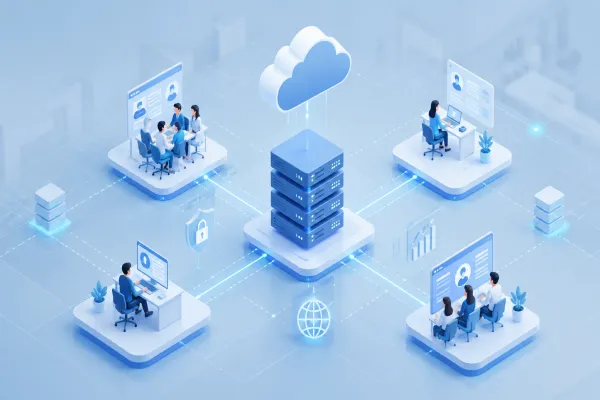
True invisible learning operations move far beyond basic batch roster updates. The modern system architecture relies on an interactive event mesh that actively captures actions inside daily production tools to trigger targeted microlearning assets. For instance, when a customer service technician repeatedly encounters an error code while closing an internal ticket, an API event fires to analyze the specific technical competency gap.
The integrated learning layer immediately processes the signal and pushes a concise, two-minute training video into their active intranet dashboard or workspace chat channel. By delivering knowledge at the exact moment of operational need, learning transforms from an administrative chore into a real-time utility. However, achieving this level of deep software integration requires a fundamental rethink of your overarching corporate learning tech stack, making it a critical component of any comprehensiveEnterprise LMS Modernization 2026 roadmap.
Technical Gaps: The Realities of Invisible LMS Integration
Implementing an omnipresent, invisible training platform exposes structural design challenges that standard software vendors completely hide from buyers. Pushing interactive quiz bots, automated skill-gap trackers, and peer-to-peer knowledge sharing tools into active operational workspaces introduces complex technical questions. When you begin pushing personalized training notifications and automated tools into your collaboration networks, you open up new security and operational vectors.
This shift requires a tight alignment with your broader IT infrastructure rules. Just as companies must establish rigid parameters for Digital Workplace Governance to manage application sprawl and protect information, they must also outline clear boundary lines for how learning applications interact with day-to-day employee communications. Enterprise technology teams must look closely at systemic risks like API payload degradation under heavy concurrency loads and loose token management across automated distributed app networks.
API Performance Optimization Versus System Overload
Flooding your production environment with continuous real-time training calls degrades overall application performance. If every user transaction across Jira, Salesforce, or an internal intranet portal triggers a synchronous request to an external learning microservice, database lag spikes instantly. This infrastructural instability mirrors why ninety percent of automated processing infrastructure upgrades fail or stall during development.
To prevent these integration dependencies from breaking your corporate portal, engineers must avoid the precise traps that cause Why Claims Automation Platforms Stagnate as Internal Portals. To shield core system operations, enterprise architects must build asynchronous, event-driven data streaming pipelines using tools like Apache Kafka or AWS SQS. Buffering learning notifications through a managed queue protects vital operational platforms from high-concurrency request surges.
Regulatory Compliance and Identity Management Guardrails
Injecting responsive automated training micro-applications into employee communication streams opens fresh security risks. If an autonomous application scans internal employee messaging channels to figure out a team's training needs, it presents an immediate data loss prevention threat. Before allowing automated systems to evaluate employee performance and dynamically generate training paths, corporate oversight is critical.
Ensuring your contextual learning layer operates safely means integrating its deployment with your organization's established framework for AI Governance in the Digital Workplace: Policies for Copilot and Agents in 2026. Software engineers must enforce explicit cryptographic verification mechanisms across all integrated systems. These automated agents require short-lived, scoped access tokens that strictly isolate user data footprints. Every learning application must operate under a zero-trust model to ensure that proprietary company information never slips into external learning databases.
Modernized Learning Integration Approach Comparison
| Architectural Dimension | Traditional Siloed LMS Portals | Basic Connected API Plugins | Modern Invisible Headless Architecture |
|---|---|---|---|
| Delivery Model | Synchronous user pull requests | Scheduled batch synchronization | Asynchronous event mesh push |
| User Authentication | Manual SAML or portal login | Basic single sign-on linking | Ephemeral token verification |
| Interface Footprint | External web application | Simple iframe components | Native headless API layout |
| API Load Impact | Low administrative usage | Periodic system sync surges | Continuous asynchronous traffic |
| Data Security Level | High database isolation | High vendor security exposure | Secure zero-trust validation |
Next-Step Architectural Review
Transforming your legacy training setup into an integrated background service requires deep experience with complex digital workspace software. If you are currently dealing with brittle integrations or struggling with user platform adoption issues, we can help optimize your current strategy.
Connect with Valuebound to review your digital workplace infrastructure. Our engineering group builds custom middleware connections and secure headless portals to help you deploy an invisible corporate learning ecosystem smoothly.
Advanced Analytical Orchestration and Skills Taxonomies
Transitioning to an un-networked user interface layer requires a complete overhaul of how your company categorizes employee skills. Traditional architectures map courses directly to static job titles. In contrast, an embedded learning system depends on an active, living skills taxonomy that maps individual capabilities directly to technical tasks.
By analyzing telemetry data patterns from search queries, ticketing tools, and portal interactions, the underlying engine measures real-world performance shifts. This transformation changes your training operation from a simple administrative checkbox into an agile capability ecosystem that proactively strengthens your workforce.
Frequently Asked Questions
How does an invisible LMS impact overall system performance?
An invisible LMS can create noticeable database latency if you execute integrations using synchronous point-to-point API endpoints. To prevent system lag, enterprise developers should implement an asynchronous event mesh that buffers data traffic using managed messaging queues. This architectural pattern guarantees that real-time contextual microlearning notifications drop into the user interface without overloading production servers.
What authentication methods secure an invisible LMS inside a digital workplace?
Securing an invisible LMS requires moving past standard static passwords to implement robust single sign-on systems paired with short-lived cryptographic tokens. Every dynamic user connection or embedded application widget must use oauth validation protocols to protect employee data. This framework ensures that individual telemetry files and training results remain completely safe as they pass across your internal network.
How do you track mandatory compliance inside an invisible LMS architecture?
Tracking regulatory compliance inside an invisible LMS relies on headless webhooks that transmit user completion metrics instantly back to your central system of record. When an employee completes an embedded security module inside Slack or an intranet channel, an API payload updates the compliance file immediately. This automation removes the need for manual reports while giving your audit teams real-time verification records.
Can a headless invisible LMS connect directly with custom intranets?
Yes, a headless invisible LMS integrates natively with custom corporate intranets by decoupling the backend training database from your front-end display layers. Using RESTful APIs or GraphQL endpoints, your intranet developers can pull learning modules directly into personalized employee dashboards. This eliminates platform jumping completely, keeping your workforce focused inside a single corporate workspace.
Strategic Architectural Execution
Building a successful invisible learning system requires looking past basic web portal templates to focus on deep application connectivity, strict data security boundaries, and responsive interface design. When you weave contextual microlearning assets directly into daily production tools, you eliminate user friction and turn professional development into a natural part of the workday.
Let us assist you in modernizing your corporate intranet environment. Contact Valuebound today to discuss your workspace engineering roadmap with our specialist group.
Download our complete Enterprise Intranet Buyer's Kit to structure your evaluation effectively. Fill out the form below to receive your copy.