
The High Cost of Failure
Your organization runs on systems built decades ago. Maintenance eats 70-80% of the IT budget. Competitors move faster. Yet when you finally launch modernization, the odds stack against you.
Studies show 70-79% of these projects fail to meet goals, exceed budgets dramatically, or get abandoned. You already know the surface reasons. The real question is why even well-funded efforts by experienced teams collapse repeatedly.
This article goes beyond generic lists. It exposes the architectural and strategic gaps most vendors and consultants ignore. These insights come from years inside enterprise digital workplace transformations where legacy systems blocked real progress.
What Most Articles Get Right
Legacy systems create real pain. High maintenance costs. Security vulnerabilities. Poor scalability. Difficulty integrating with modern tools like AI or cloud platforms. Talent pools for old technologies shrink fast.
Common advice focuses on choosing the right strategy. Options include rehosting, replatforming, refactoring, or full replacement. Many articles stress assessment, stakeholder buy-in, and change management. These points matter.
They do not go deep enough for leaders who have read the basics. You need what actually determines success or failure at scale.
Treating Modernization as a Pure Technology Project
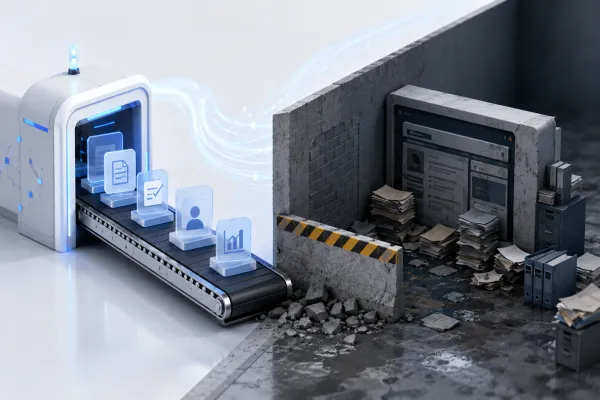
This is the number one reason projects fail. Teams pick a shiny new stack and start rebuilding. They ignore that legacy systems encode decades of business rules, exceptions, and workarounds.
The result is a new system that looks modern but fails to deliver expected business outcomes. You move to the cloud yet still face the same deployment bottlenecks and integration headaches.
Real modernization is business transformation. It requires rethinking processes, not just code. Vendors often skip this because it is harder to sell and execute. You pay the price later.
Underestimating Hidden Dependencies and Knowledge Loss
Legacy codebases contain undocumented dependencies and tribal knowledge held by retiring experts. New teams discover these only during migration. Scope explodes. Timelines stretch. Costs balloon.
Many organizations lose critical institutional knowledge before the project even starts. Original architects have moved on. Documentation is outdated or missing. This creates blind spots that no automated tool fully resolves.
Successful projects invest heavily in discovery and knowledge capture early. They treat this as a core risk, not an afterthought.
The Big Bang Migration Trap
The temptation is strong. Build everything in parallel, then flip the switch. This almost never works in complex enterprise environments.
Downtime risks are too high. Unforeseen edge cases appear late. Users resist sudden change. Incremental approaches with strangler fig patterns or domain-driven slices deliver value faster and reduce risk dramatically.
Yet many plans still commit to unrealistic big-bang timelines. This creates pressure that leads to corners being cut on testing and data migration.
Misaligned Business and Technical Priorities
IT pushes for technical elegance. Business needs quick wins and minimal disruption. Without tight alignment, projects drift. Features get rebuilt that deliver little value. Critical processes get deprioritized.
Gaps in governance make this worse. Leadership treats modernization as an IT initiative instead of a board-level strategic program. The result is technology that solves the wrong problems.
Comparison Table: Modernization Approaches
| Approach | Risk Level | Time to Value | Business Alignment | Common Failure Mode | Success Rate Indicator |
|---|---|---|---|---|---|
| Big Bang Rewrite | High | Very Low | Poor | Scope creep, missed deadlines | Low |
| Lift and Shift | Medium | Medium | Low | “Modernized legacy” with same issues | Medium |
| Incremental Strangler | Low | High | High | Requires discipline | High |
| Hybrid (Selective Replacement) | Medium | High | High | Integration complexity | Highest |
If your legacy systems are blocking digital workplace agility and creating constant project risk, Valuebound can help. We have guided enterprises through exactly these modernization challenges by focusing on business outcomes first. Visit Valuebound to start a focused conversation about your environment.
Building Incremental Confidence Instead of Perfection
Focus on high-value domains first. Deliver working slices that prove value. Use these wins to build organizational confidence and funding for larger phases.
This approach surfaces issues early when they are cheaper to fix. It keeps stakeholders engaged through visible progress. Most importantly, it treats people and processes as equal to technology.
Architectural decisions matter. Choose patterns that allow gradual evolution rather than wholesale replacement. This is where deep expertise separates successful outcomes from expensive lessons learned.
FAQs
Why does legacy software modernization fail even with strong technical teams?
Legacy software modernization fails because teams treat it as a coding exercise instead of business transformation. Hidden dependencies, lost knowledge, and misaligned priorities create problems no amount of engineering talent can overcome alone. The most successful efforts prioritize discovery, incremental delivery, and continuous business involvement from day one.
What is the biggest risk in legacy system modernization projects?
The biggest risk is the big bang approach combined with underestimating complexity. Organizations often discover critical issues too late, leading to massive overruns. Incremental modernization with clear domain boundaries reduces this risk significantly while delivering value faster.
How can enterprises avoid common legacy software modernization failure points?
Enterprises can avoid legacy software modernization failure by aligning technical decisions tightly to business outcomes, investing heavily in early discovery, and using strangler patterns for gradual replacement. Strong governance and change management are non-negotiable. Focus on high-impact areas first to build momentum.
When should an organization start legacy software modernization?
Start legacy software modernization when maintenance costs exceed 70% of IT spend, integration blocks innovation, or security risks become unacceptable. Do not wait for a crisis. Proactive assessment of dependencies and business value helps create a realistic roadmap that avoids the common traps.
Conclusion
Legacy software modernization fails most often because organizations rebuild old processes in new technology instead of transforming how the business operates. Success requires treating it as strategic business change with incremental execution, deep discovery, and tight alignment.
Valuebound partners with enterprises ready to move beyond surface-level upgrades. We bring the architectural insight and practical experience needed for outcomes that last. Visit Valuebound to discuss your challenges.
Download our complete Enterprise Intranet Buyer's Kit to structure your evaluation effectively. Fill out the form below to receive your copy.